
The Complete History of the GMT Pilot's Watch: From the Airline Era to the Stars
The GMT pilot's watch is far more than a luxury timepiece — it is a symbol of adventure, precision, and human progress. From the cockpit of transatlantic airliners in the 1950s to the astronauts orbiting the Moon, this style of watch has accompanied travelers who defined an era. Its evolution tells the story of how a dual-time sports watch became a global legend, admired for its dual-time functionality and unmistakable design.
1. The Birth of a Legend: The 1955 GMT Pilot's Watch
In the mid-1950s, as commercial aviation expanded across continents, one of the great American airlines sought a tool for its pilots to track two time zones simultaneously — home base and destination. Watchmakers responded with an ingenious design: a rotating 24-hour bezel combined with an additional hand completing one rotation per day. The result was the first GMT pilot's watch, introduced in 1955.
The model’s red-and-blue “red & blue” bezel became instantly recognizable. The colors weren’t just aesthetic — red indicated daylight hours, blue night-time. The earliest bezels were made of luminous Bakelite, allowing pilots to read them in the dark. Though fragile, this innovation marked the birth of a horological icon.
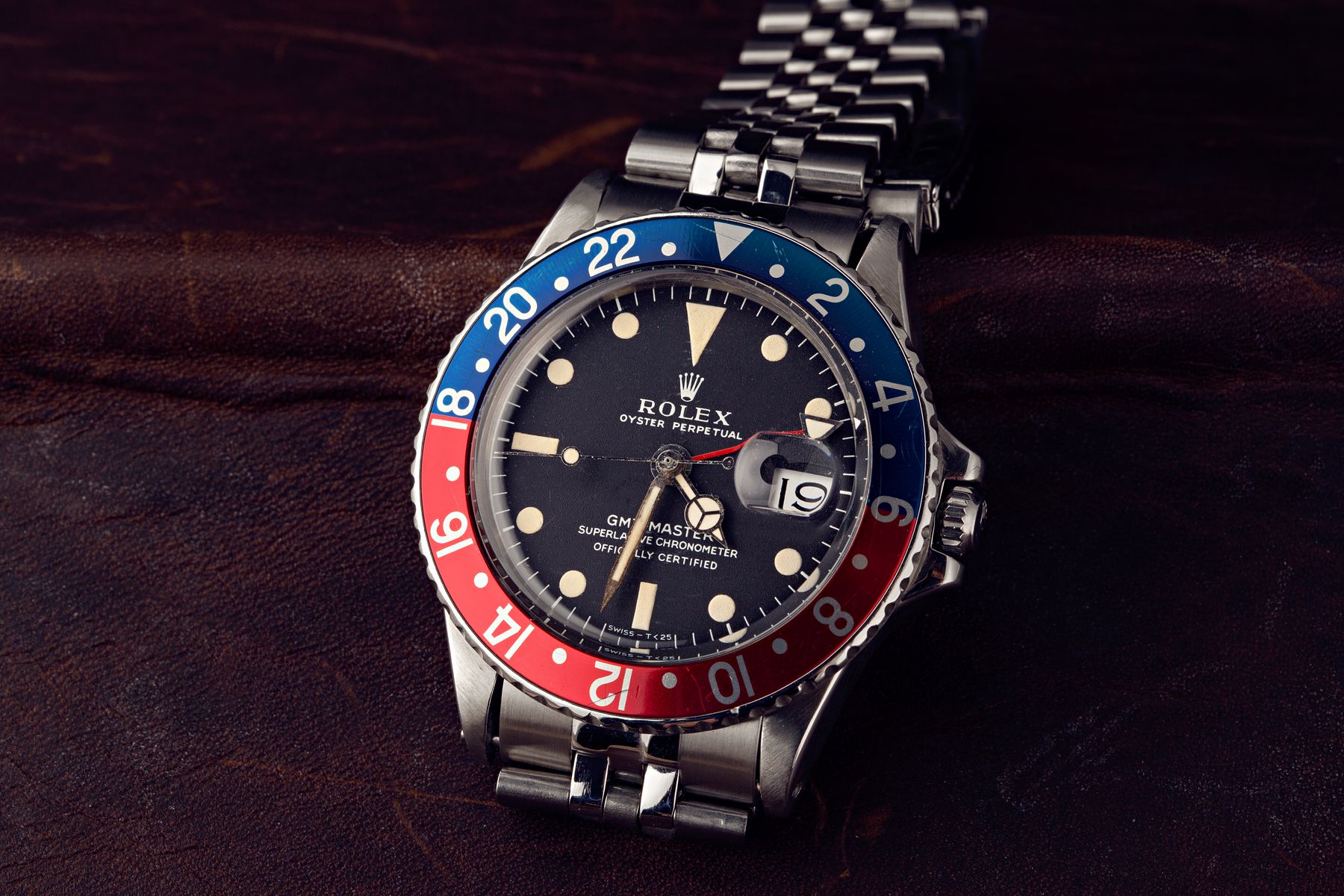
Just four years later, the GMT proved its reliability during the first non-stop airline flight from New York to Moscow in 1959. Captain C. N. Warren, at the controls of the Boeing 707, famously credited the crew’s dual-time watches with navigating the flight. In the midst of the Cold War, the watch not only guided time but symbolized a rare connection between East and West.

2. The Evolution of the First-Generation GMT: From Bakelite to Aluminum
Real-world use quickly revealed that Bakelite was too fragile for a pilot’s watch, leading manufacturers to replace it with aluminum on the second-series GMT introduced in 1959. The case grew from 38 mm to 40 mm and gained crown guards for added robustness. That reference remained in production for more than two decades — a testament to its timeless design.
Through the 1960s and 1970s, the GMT was offered in multiple versions in stainless steel, yellow gold, and two-tone configurations. Bezel colors multiplied: the classic “red & blue”, the “brown & gold,” and the understated all-black. Inside, the calibers evolved steadily, improving precision and reliability.
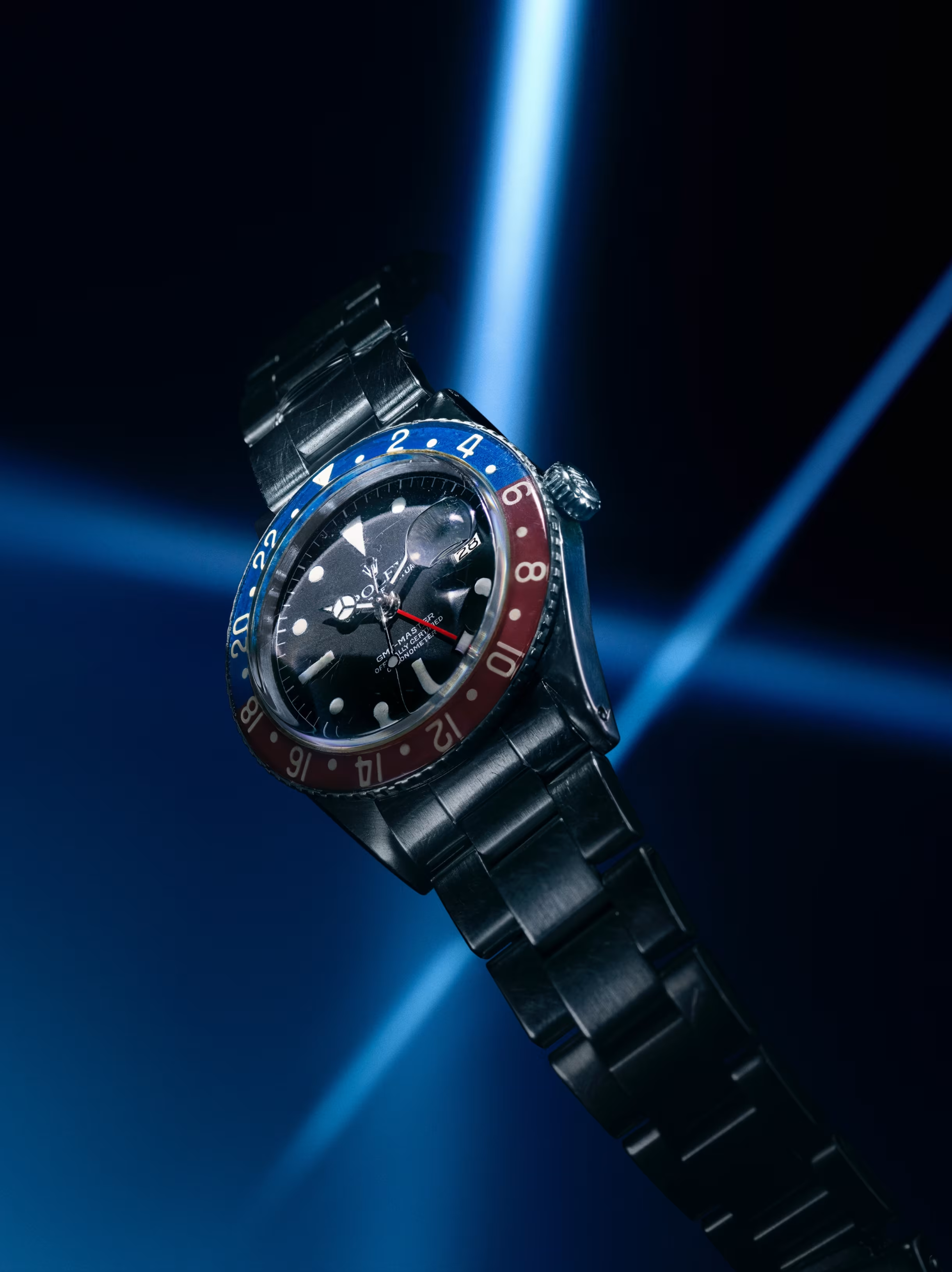
During this era, the GMT watch accompanied explorers on extraordinary journeys. One of the most notable was the Pegasus Overland Expedition in 1959, where eight British Army adventurers drove around the world through 34 countries over 51 weeks — each equipped with a GMT. Their journey showcased the watch as a symbol of endurance and discovery.
3. The Second-Generation GMT: The Next Step for the Jet Age
In 1982, a major innovation arrived: the second-generation GMT. Externally similar to its predecessor, it introduced a mechanically independent 12-hour hand. This meant travelers could adjust local time without affecting the 24-hour hand — a true advancement for global pilots.
The debut model earned the nickname “thick case” version for its deeper profile. It came only in stainless steel with a red-and-black bezel. A few years later, a slimmer reference offered more variations — from the classic red & blue to all-black bezels — as well as gold and two-tone versions. The second-generation GMT became not just a pilot’s instrument but a lifestyle statement.
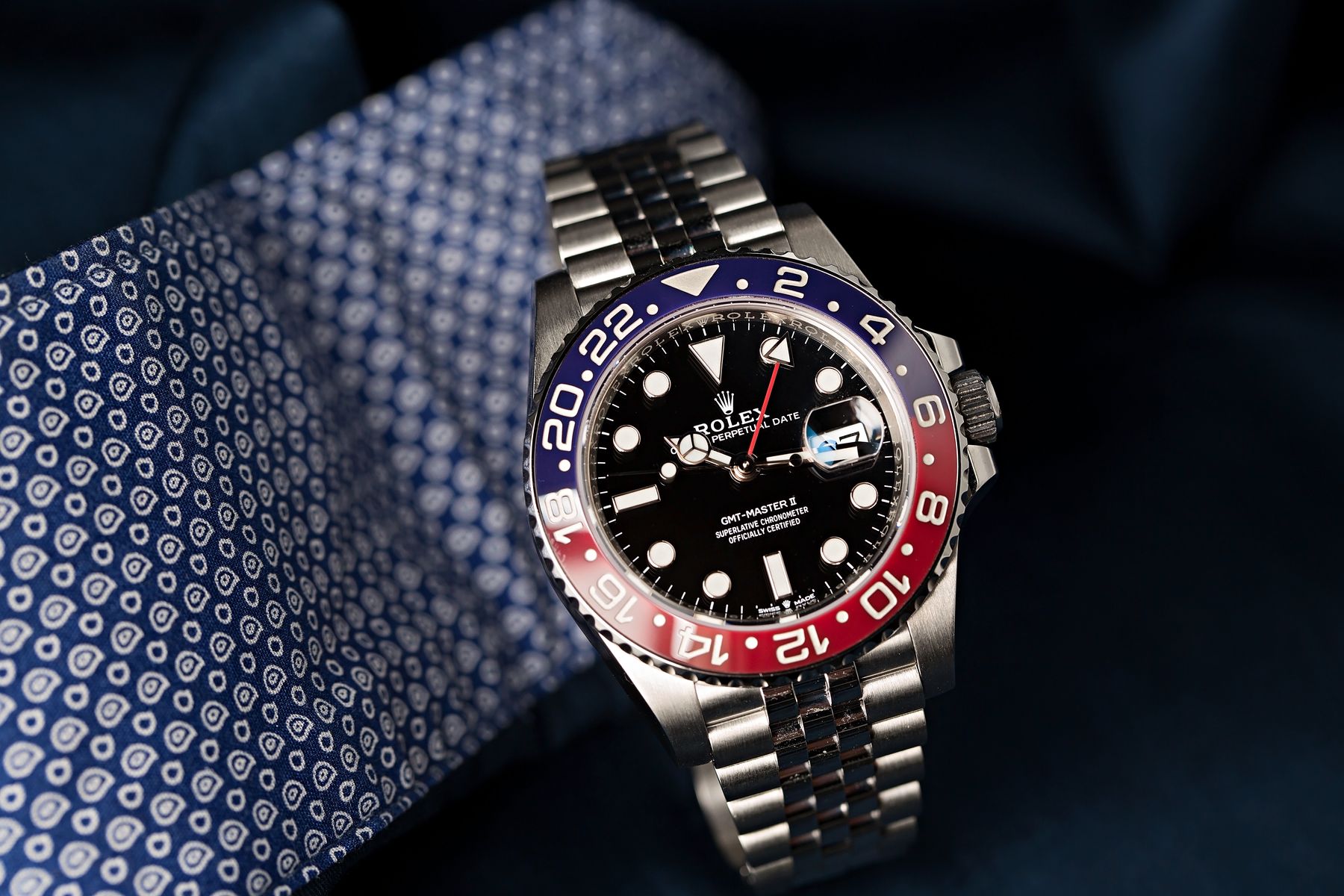
Throughout the 1980s and 1990s, movements were refined and the screw-down case was strengthened to 100 meters water-resistance. By the 2000s, the second-generation GMT had become an icon for world travelers and collectors alike.
4. Innovation in Material: The Ceramic Bezel Era
A new chapter began in 2005 with the introduction of the ceramic bezel, an engineered alloy virtually impervious to fading and scratches. An 18 k yellow gold GMT was the first to showcase this cutting-edge material. The following year saw a two-tone edition, and 2007 brought a stainless-steel version — all featuring sleek black ceramic bezels.
At first, a two-tone ceramic bezel was declared impossible to manufacture. But in 2013 the unimaginable was accomplished: a GMT with a black-and-blue ceramic bezel. One year later came the white-gold red-and-blue edition, bringing the beloved colour combination back in brilliant ceramic.
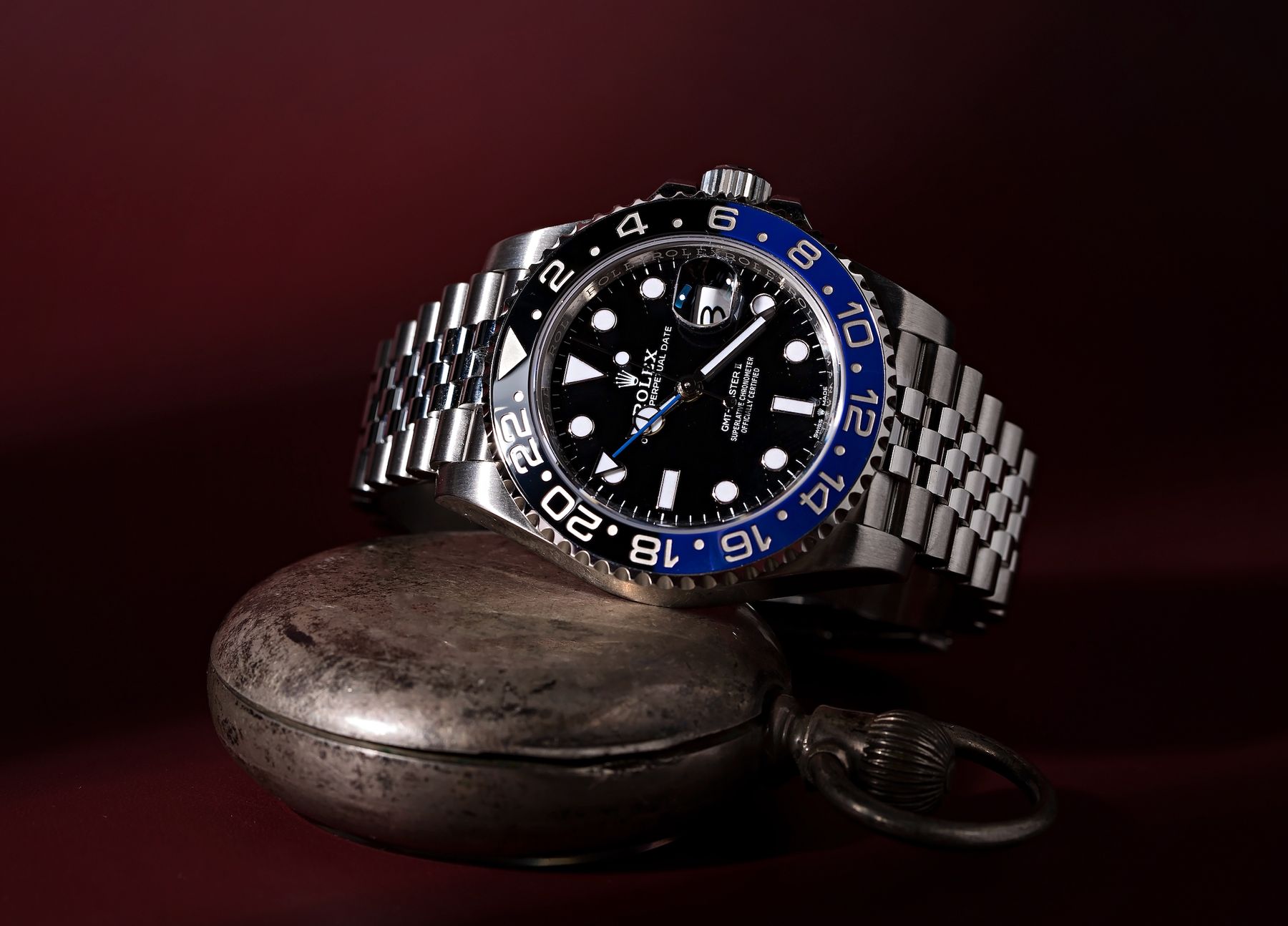
Each innovation reaffirmed the GMT’s blend of tradition and technology. The case and bracelet designs became more refined, and the collection introduced a five-link bracelet option alongside the traditional three-link style, appealing to both vintage enthusiasts and modern collectors.
5. The Modern GMT: New Movements and New Horizons
In 2018, the second-generation GMT received a revolutionary new movement. Featuring 70 hours of power reserve, improved precision, and greater energy efficiency, this marked a new standard in dual-time engineering.
Several stunning versions were launched:
Steel – stainless steel with red/blue “red & blue” ceramic bezel on a five-link bracelet.
Two-tone – steel and rose gold with a brown/black “brown & gold” bezel.
Solid gold – full rose gold version.
White gold – red-and-blue bezel edition.
A year later came the black-and-blue edition on a five-link bracelet, and in 2021 both the red-and-blue and black-and-blue models were offered with a choice between three-link and five-link bracelets.
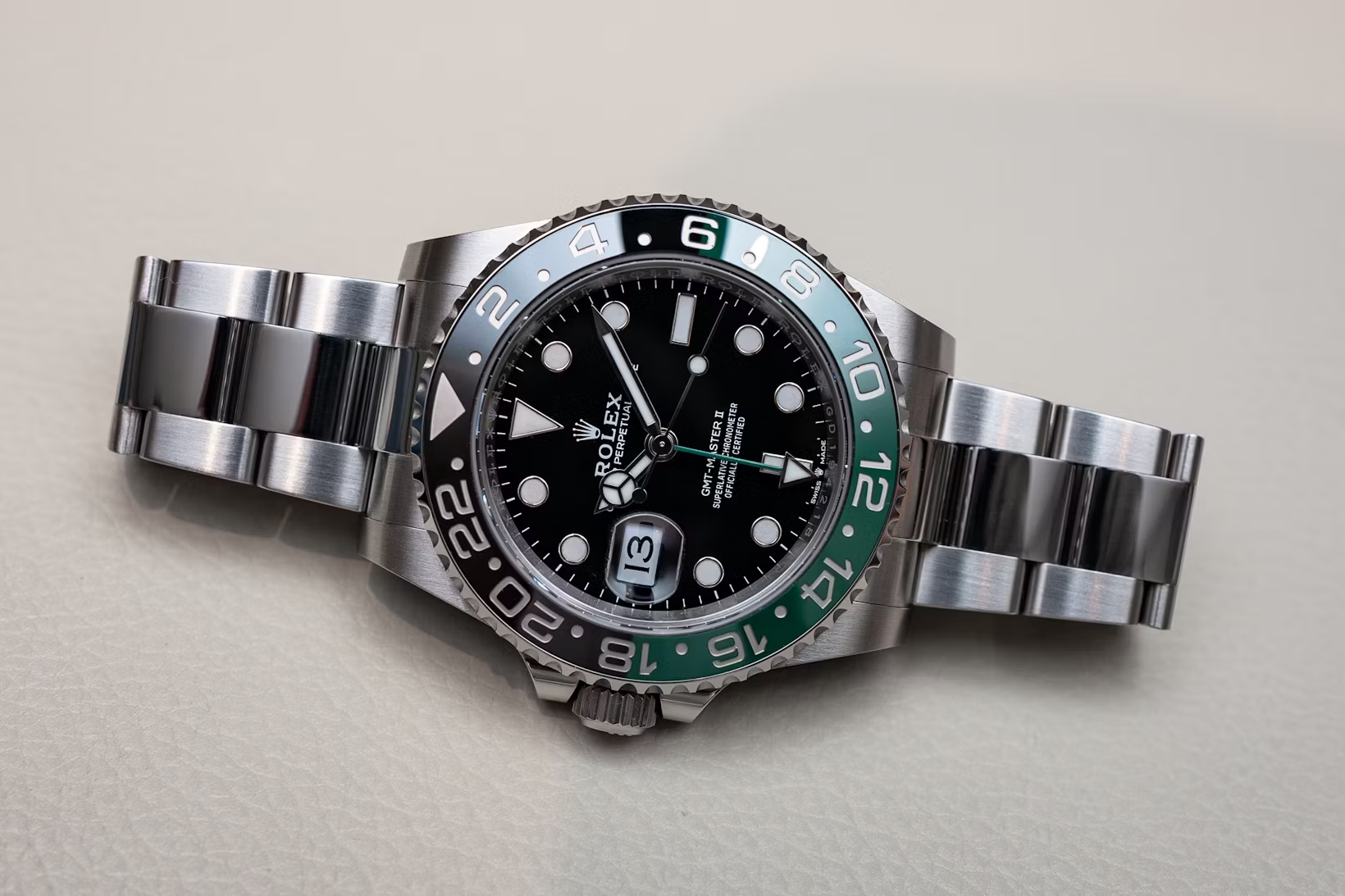
Then in 2022 the industry was stunned by a left-handed “destro” model featuring a green-and-black ceramic bezel and the crown on the left side. It was the first dual-time sports watch of its line designed specifically for left-hand wearers.
6. The GMT Watch in Aviation and Space
The GMT’s story doesn’t end with civil aviation. Its legacy extended into some of humanity’s most daring frontiers.
From 1959 to 1968, NASA and the U.S. Air Force conducted the X-15 rocket-plane program, pushing flight to Mach 6.7. Pilot William J. Knight wore a GMT during his record-breaking mission in 1967 — proof of the watch’s ability to endure extreme conditions.
In 1970, Apollo 13 astronaut Jack Swigert relied on his GMT watch throughout the near-disastrous mission that nearly cost three lives. Swigert used precise timing to adjust the module’s trajectory and ensure the crew’s safe return to Earth.
Two years later, during Apollo 17, the final crewed lunar mission, Captain Ronald Evans wore his GMT while orbiting the Moon and performing a spacewalk. The watch had literally traveled beyond our planet — a fitting testament to its engineering excellence.

7. The GMT Today: A Modern Icon
More than sixty years after its debut, the GMT watch remains a symbol of sophisticated travel and technical mastery. Its ability to track multiple time zones, paired with timeless design and unmatched craftsmanship, keeps it at the top of collectors’ wish lists worldwide.
Every generation of the GMT — from the Bakelite bezel of the 1950s to today’s ceramic innovations — represents a commitment to progress while honoring heritage. Whether on a pilot’s wrist, an astronaut’s suit, or a collector’s display case, the GMT embodies precision and adventure in equal measure.
8. Inspired by Perfection: The Wclocks GMT Collection
While the classic GMT stands as an icon of aviation history, its timeless aesthetics and dual-tone design have inspired a new generation of luxury timepieces and décor pieces. At Wclocks, we’ve reimagined that same spirit — bringing the elegance of the legendary pilot’s watch to your home and office through premium wall clocks and accessories.
Our GMT-inspired collection is designed in the style of the distinctive red-and-blue, black-and-blue, and green-and-black colorways that defined generations of travelers. Each model mirrors the signature bezel rotation markings, precision minute indicators, and luminous dial style that made the original so admired — but in a form that complements interior design as much as horology.
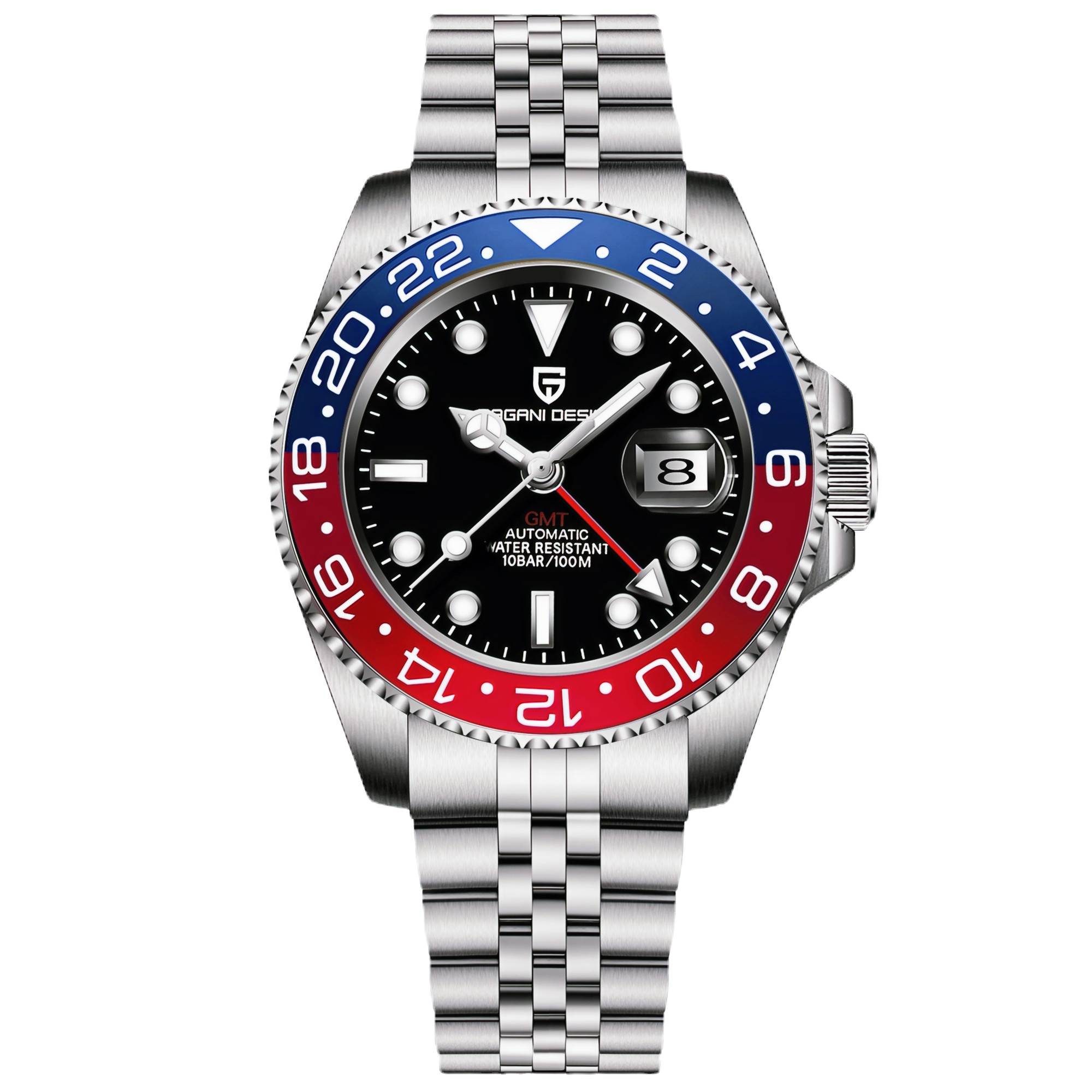
Crafted with meticulous attention to detail, every Wclocks GMT edition embodies
the same philosophy of precision and durability that defined the early aviation watches: a blend of mechanical soul and modern design.
9. The Modern Alternative: Luxury Design Meets Accessibility
Owning a vintage GMT pilot’s watch is the dream of many collectors — yet at Wclocks, we believe that great design should be within reach for everyone who appreciates craftsmanship and heritage. Our GMT wall clocks and desk clocks offer that same sophistication and iconic style, at a fraction of the price.
Each clock features:
Luxury Stainless Steel Construction – Crafted from 316L stainless steel
Bracelet Style – Available in both three-link and five-link configurations,
Sapphire Crystal Glass – Ultimate Clarity & Scratch Resistance
Automatic Movement – Self-Winding Excellence
10 ATM Water Resistance (100M)
Luminous Hands & Markers
Complete Calendar Function
Secure Folding Clasp with Safety
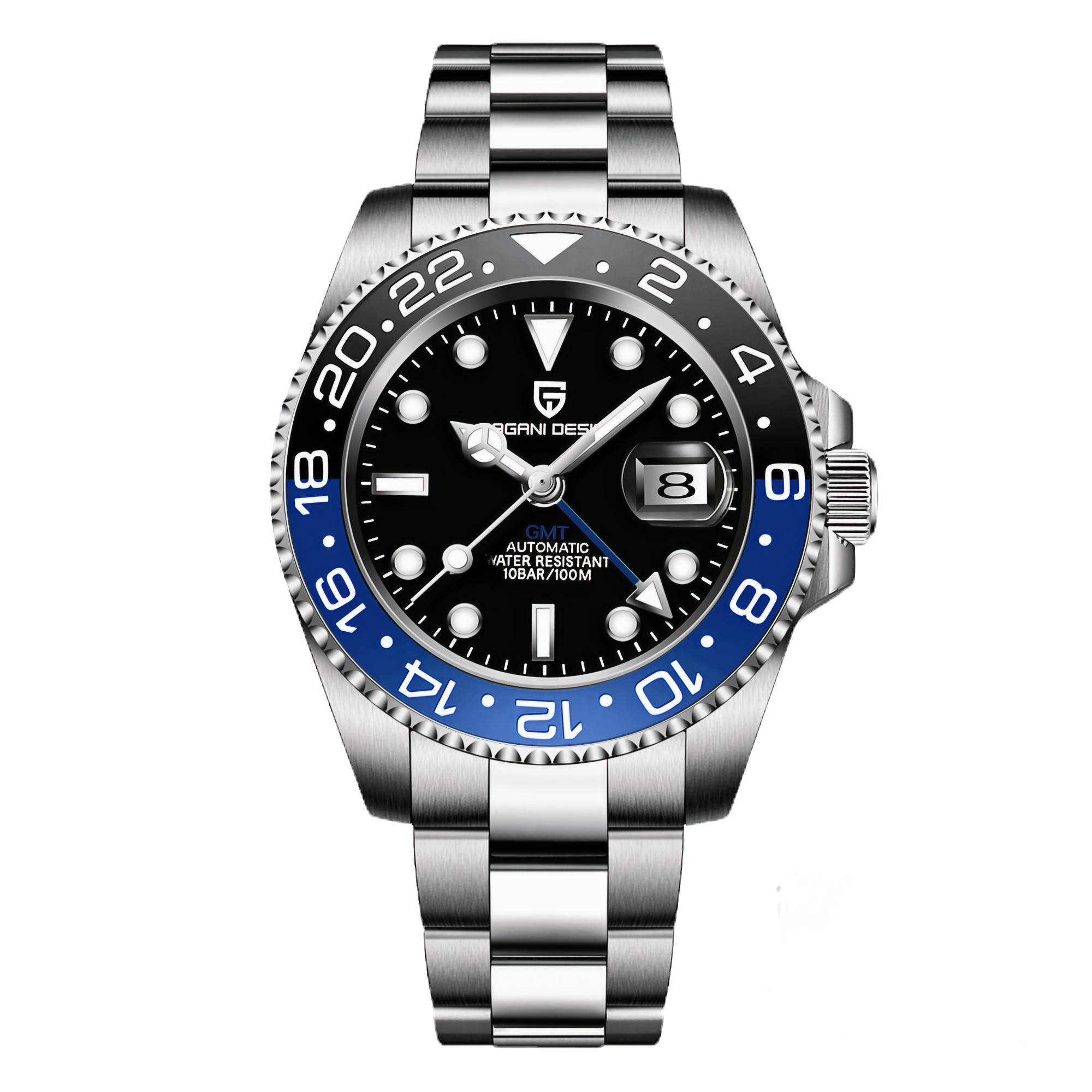
With these details, our alternative GMT collection captures the essence of the classic dual-time watch — the balance between adventure, engineering, and style — while offering everyday practicality for collectors, travelers, and watch enthusiasts.
10. A Statement of Prestige for Every Space
A wall clock may tell time, but a Wclocks GMT-inspired timepiece tells a story. Whether it’s the vibrant contrast of the red-and-blue bezel, the stealthy tones of the red-and-black edition, or the bold modernity of the green-and-black GMT, each clock transforms a room into a space of distinction.
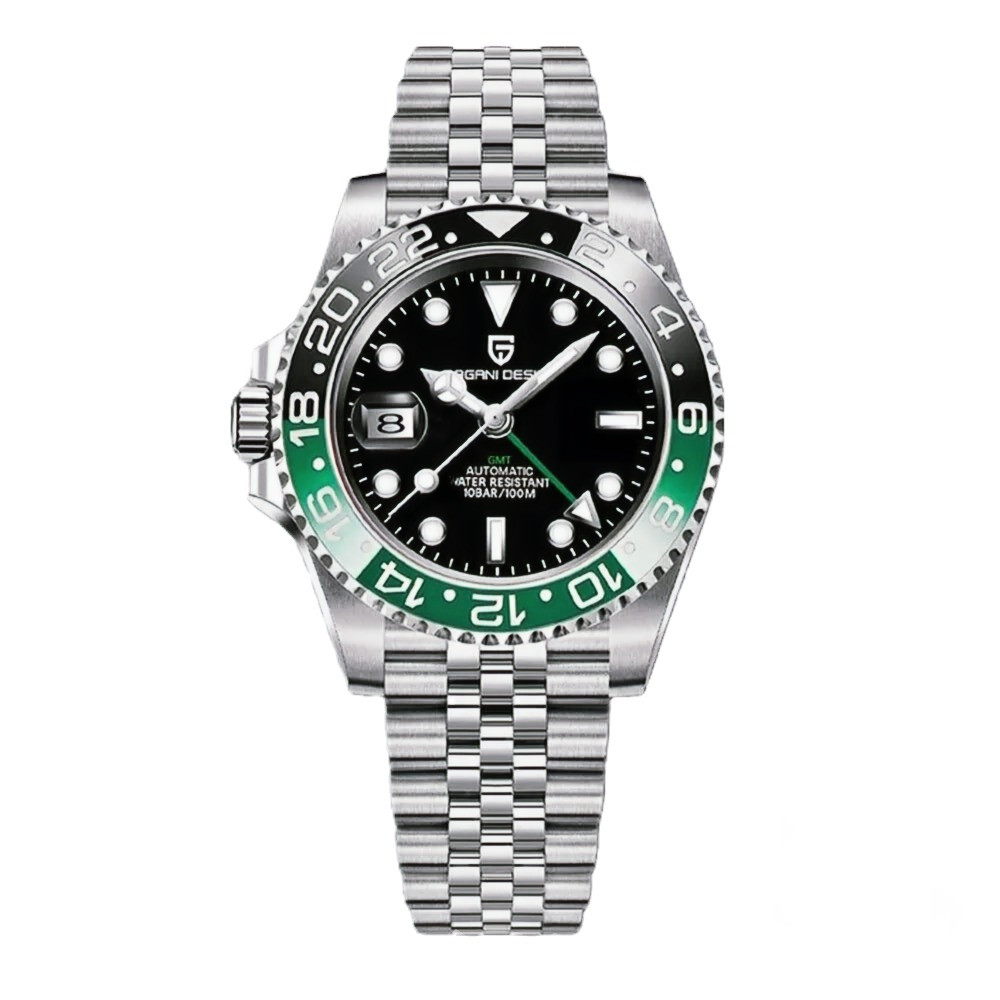
Perfect for collectors, frequent flyers, and those who simply love timeless design, these pieces merge functionality with artistic presence. Each clock serves as both a design object and a conversation piece, honoring the enduring legacy of the GMT complication while adding a touch of contemporary luxury to your interior.
At Wclocks, every design detail — from the applied indices to the rotating bezel pattern — is a tribute to decades of horological history. We don’t simply copy; we design in the style of the icon and reinterpret it for a new context — the modern luxury lifestyle.
11. Explore the Wall Clocks GMT Collection
From vintage aviation inspiration to cutting-edge materials, the Wall clocks GMT Collection embodies the same pursuit of perfection that made the GMT complication a legend. Each clock is handcrafted to deliver presence, precision, and prestige — the hallmarks of true timekeeping excellence.
In addition to our modern GMT-inspired designs, we also offer a dedicated GMT wall clocks collection, capturing the look, feel, and timeless appeal of the original pilot’s watch. These pieces are inspired by the distinctive bezels and colorways that defined the classic GMT, making them perfect for collectors and enthusiasts who appreciate both horological heritage and decorative elegance.
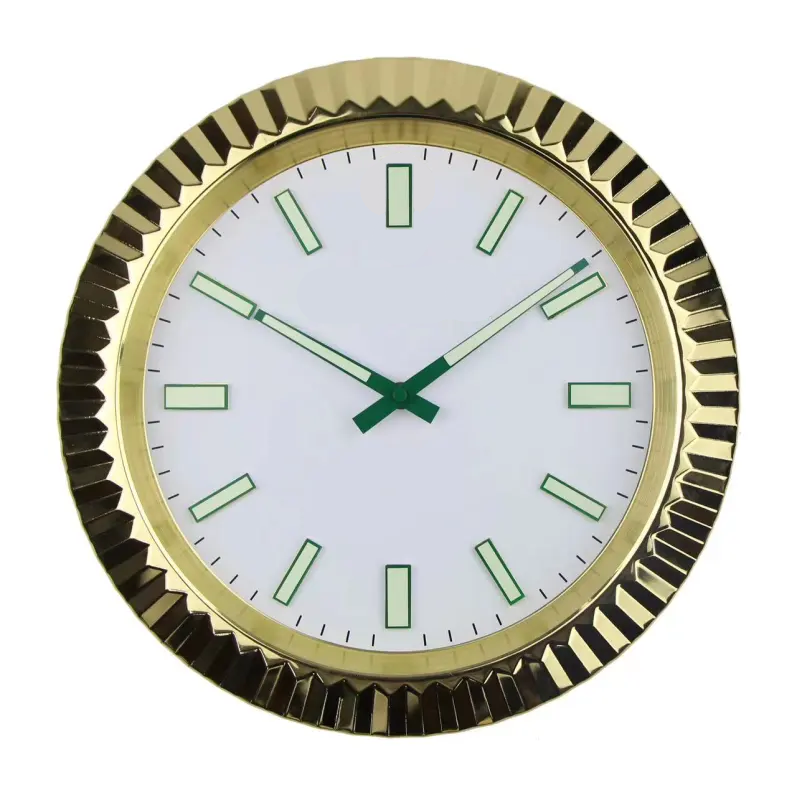
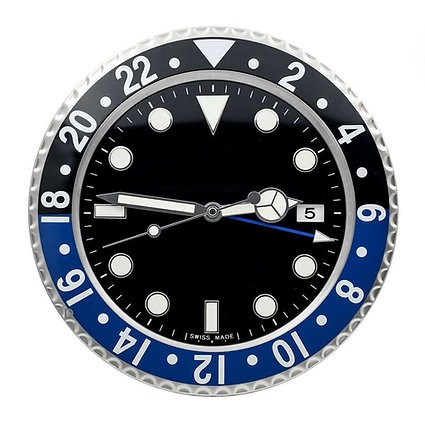

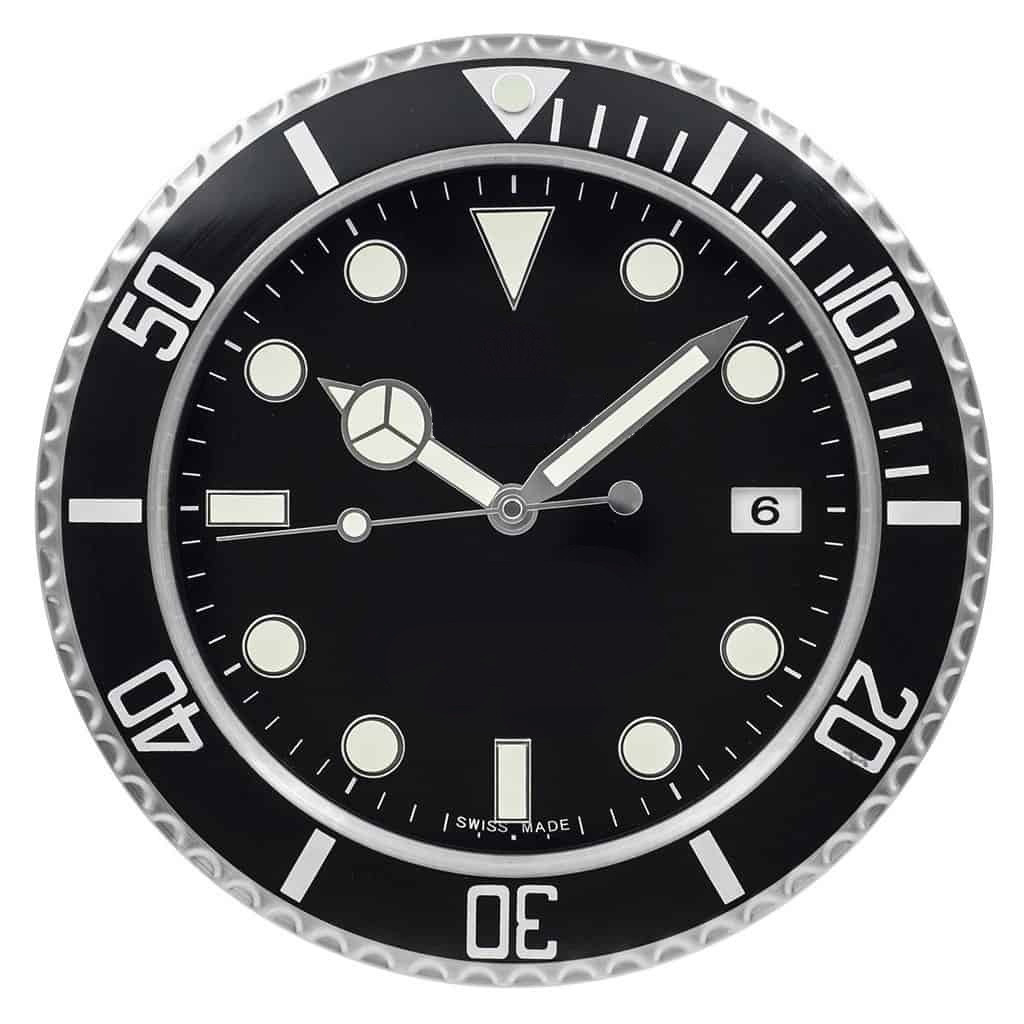
Bring home a piece of history, reimagined for modern living.
Explore the full GMT Collection at Wclocks
FAQ
What is a GMT watch and what was it originally designed for?
A GMT watch is a professional pilot’s watch created in the 1950s to help airline crews track multiple time zones at once. It combines a 24-hour hand with a rotating bezel, allowing the wearer to read local time and a second reference time simultaneously – a crucial feature for early long-haul aviation.
What is the difference between a first-generation and second-generation GMT?
Both look similar, but the second-generation GMT features an independently adjustable 12-hour hand. That means you can change local time in one-hour jumps without stopping the movement or disturbing the 24-hour hand, making it even more practical for frequent travelers. The original GMT keeps the 12- and 24-hour hands mechanically linked.
What do the GMT bezel colors mean (red/blue, red/black, black/blue, green/black)?
The colored bezels on first- and second-generation GMT watches started as a functional day/night indicator: typically red for daytime hours and blue for night on the classic red-and-blue bezel. Over time, four combinations became the best known – red/blue, red/black, black/blue and green/black – and each has become a collectible aesthetic in its own right.
When was the first GMT watch released?
The first GMT pilot’s watch was introduced in 1955 for airline pilots flying intercontinental routes. It used a bakelite bezel with a 24-hour scale and a red-and-blue colour split to help crews quickly distinguish between day and night hours in a second time zone.
Why are vintage GMT watches so expensive and desirable?
A collectible GMT watch is expensive because it combines high-end materials, in-house movements, strict quality control and strong prestige. Steel sports models in particular are produced in limited quantities relative to demand, which pushes secondary-market prices above retail. Their history with commercial aviation and space exploration adds to their status among collectors.
Is a GMT watch a good investment?
No watch is guaranteed to increase in value, but historically, steel sports models such as first- and second-generation GMT watches have held value well and often trade above their original retail price on the pre-owned market. Rarity, condition, original parts and desirable references or bezel colours all play a major role in long-term value.
How much does a GMT watch cost on the pre-owned market?
Pre-owned GMT prices vary widely depending on reference, age, condition, box and papers, and bezel variant. While some well-used or older pieces may start below the price of a new model, popular or rare references can reach many tens of thousands of dollars and exceptional vintage examples can achieve six-figure auction results.
How often should I service a GMT watch?
Most manufacturers recommend having a mechanical watch inspected and serviced roughly every 10 years, though actual intervals depend on how and where it’s worn. Vintage GMT models or heavily used watches may benefit from more frequent servicing (for example every 5–7 years) to maintain water resistance, lubrication and accuracy.
How accurate is a GMT watch supposed to be?
Modern high-end GMT watches are chronometer-certified, and the best are regulated to within −2/+2 seconds per day after casing – a stricter standard than the usual COSC chronometer certification. Older models might not match this exact spec but are still built for high everyday accuracy.
Is a GMT watch water resistant?
Yes. Most first- and second-generation GMT models are rated to 100 meters (330 feet) of water resistance, thanks to a sealed screw-down case and crown. That’s more than enough for daily wear, rain, and swimming, though they’re not designed as dedicated professional dive watches.
How can I tell if a vintage GMT watch is authentic?
Checking authenticity of a vintage GMT involves examining case and bracelet quality, the engraving and logo details, the smoothness of the movement, the serial and reference numbers, and the alignment and finishing of the dial and bezel. Because counterfeiters are increasingly sophisticated, serious buyers usually rely on trusted dealers or independent watchmakers to verify authenticity.
What are the key milestones in GMT history?
Some of the key moments in first- and second-generation GMT history include:
1955 – the original GMT with a bakelite bezel
1959 – the long-running aluminium-bezel red-and-blue classic
1970s – transitional references with upgraded movements
1982–1989 – the first second-generation references (including the thick-case debut and classic red/black and red/blue variants)
2005–2014 – the early ceramic-bezel generation
2018–2022 – the latest generation with new movements and new bezel colours, including the left-handed green-and-black model.
Why is it so hard to buy a high-end GMT at retail?
Demand for the best-known GMT models far exceeds the number of watches allocated to authorized dealers. Many clients join waiting lists, and some boutiques prioritise established customers with purchase history. As a result, these models are often easier to find on the secondary market than at an official retailer, but usually at a premium over list price.
Can you wear a GMT watch every day?
Yes. The GMT was originally built as a professional tool watch, so it’s robust enough for daily wear. Its combination of water resistance, shock resistance and scratch-resistant materials on modern models makes it suitable for travel, office, and casual use – while still elegant enough for more formal occasions.