Patek Moon Phases Wall Clock — Large Moon Phase Complication Style
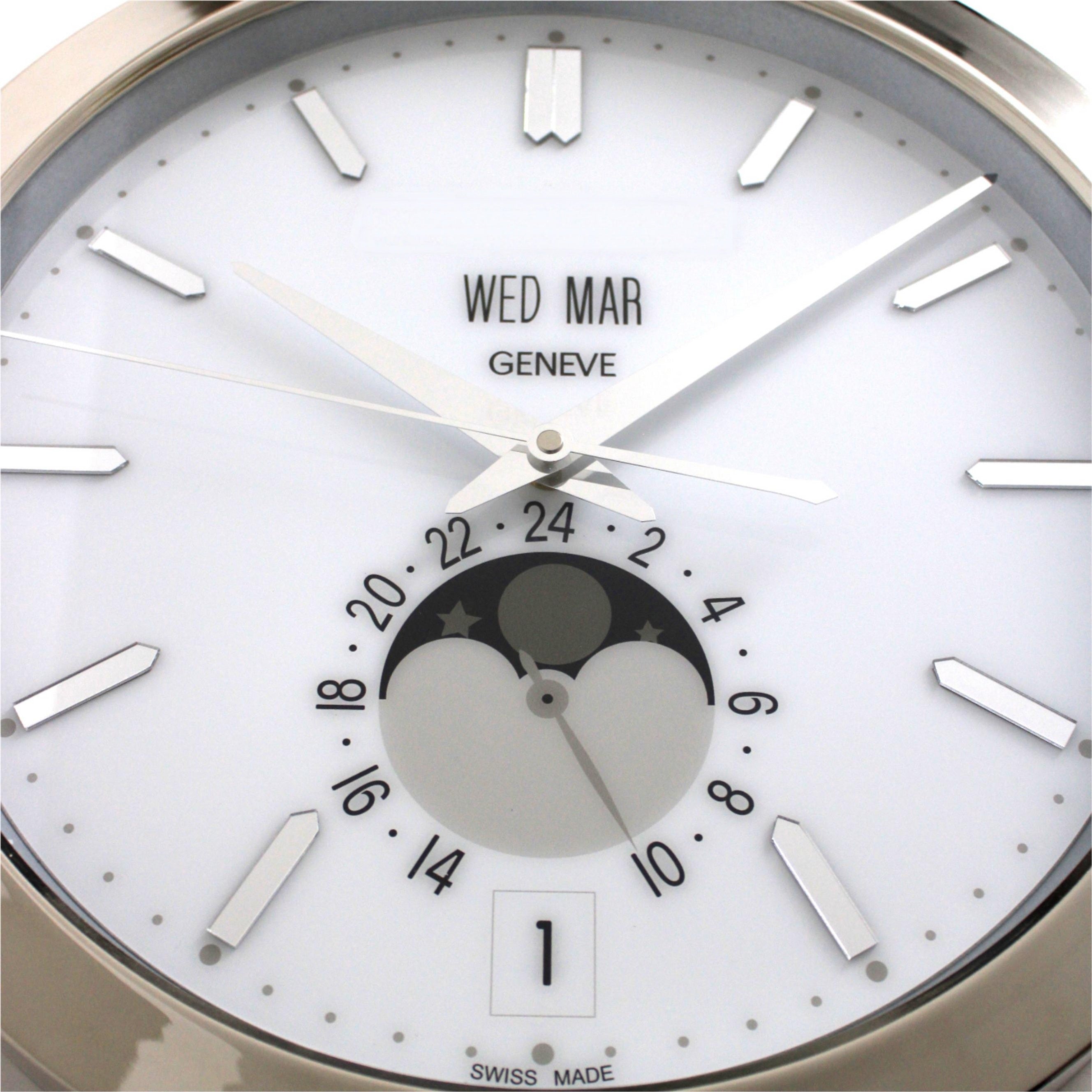
The moon phase complication is the most ancient astronomical function in watchmaking — tracking the 29.5-day lunar cycle with a rotating disc behind an aperture that shows the moon's current phase in the night sky. At 40 cm in the Patek-style format, the moon phase display becomes the centrepiece of a wall clock that connects your room to the night sky every day of the year.
Moon phase wall clock largePatek moon phase style clock40cm moon phase luxury clockLunar complication wall clockLarge moon phase luxury clock
The Oldest Astronomical Complication. 40 cm.
Humans have tracked the lunar cycle for longer than recorded history — using the moon's phases to mark months, predict tides, plan agriculture, navigate by night. The moon phase complication in watchmaking is the mechanical translation of that ancient tracking: a disc rotating once every 29.5 days behind an aperture cut to the shape of the night sky, showing waxing and waning in real time. At 40 cm the Patek Moon Phases clock makes this daily cycle visible at wall scale — the oldest timekeeping reference, presented in the most contemporary format.
Moon Phase Display
Lunar Calendar
Mineral Glass
Silent Sweep
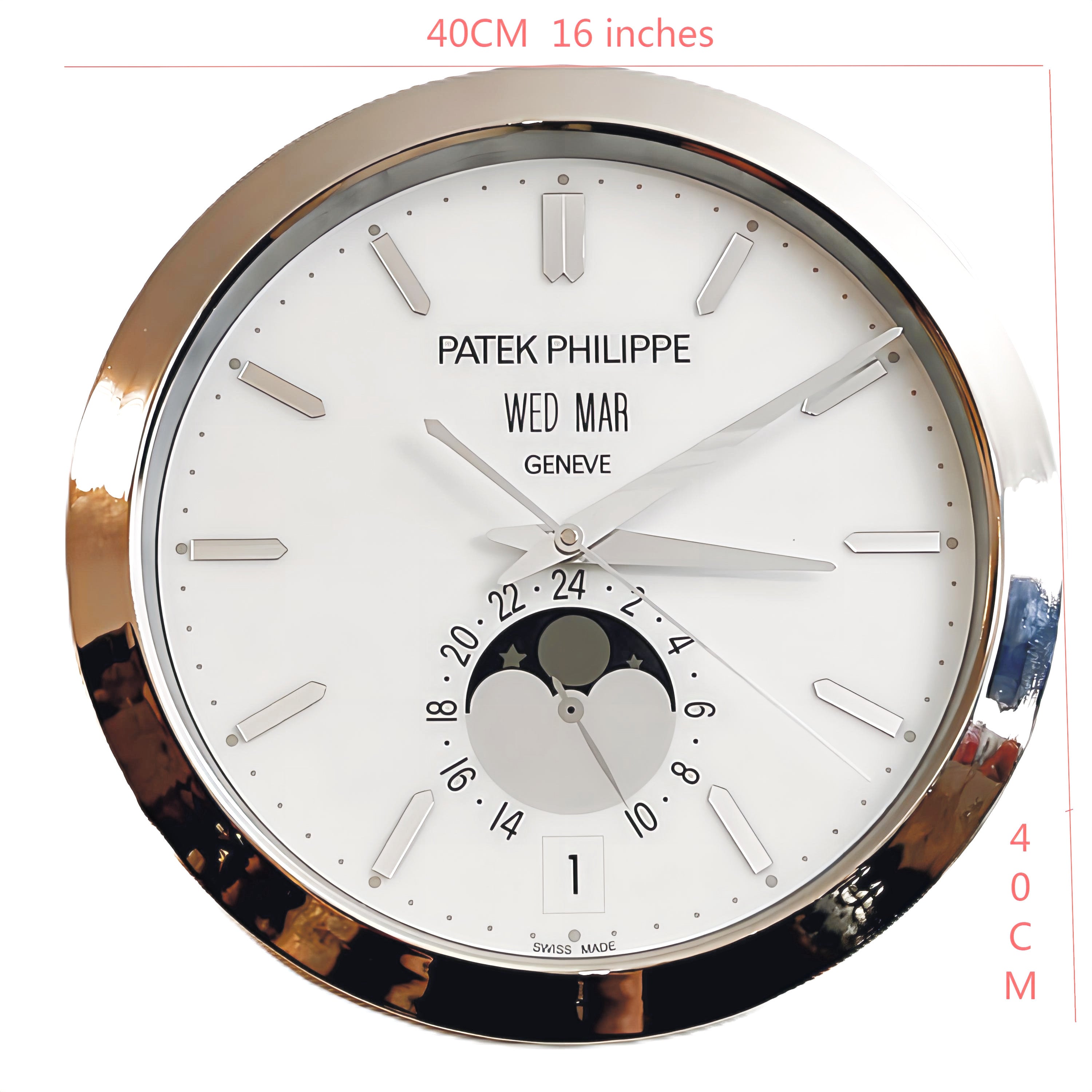
40 cm / 15.7"
Moon Phase Aperture
A rotating disc behind a sky-shaped aperture shows the current lunar phase — from new moon through waxing crescent, first quarter, gibbous, full, and back through waning to new. The most visually poetic complication in watchmaking.
Patek-Style Format
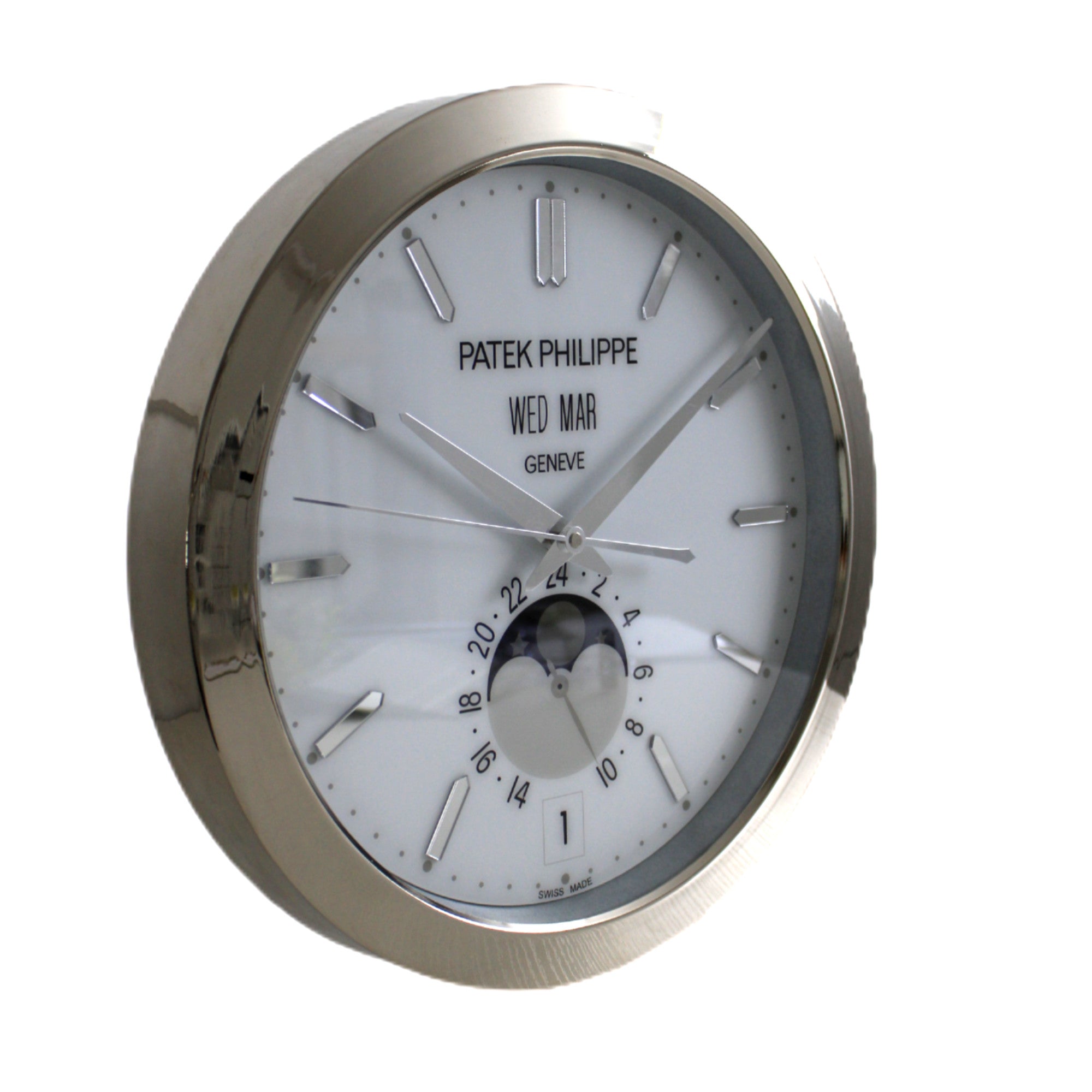
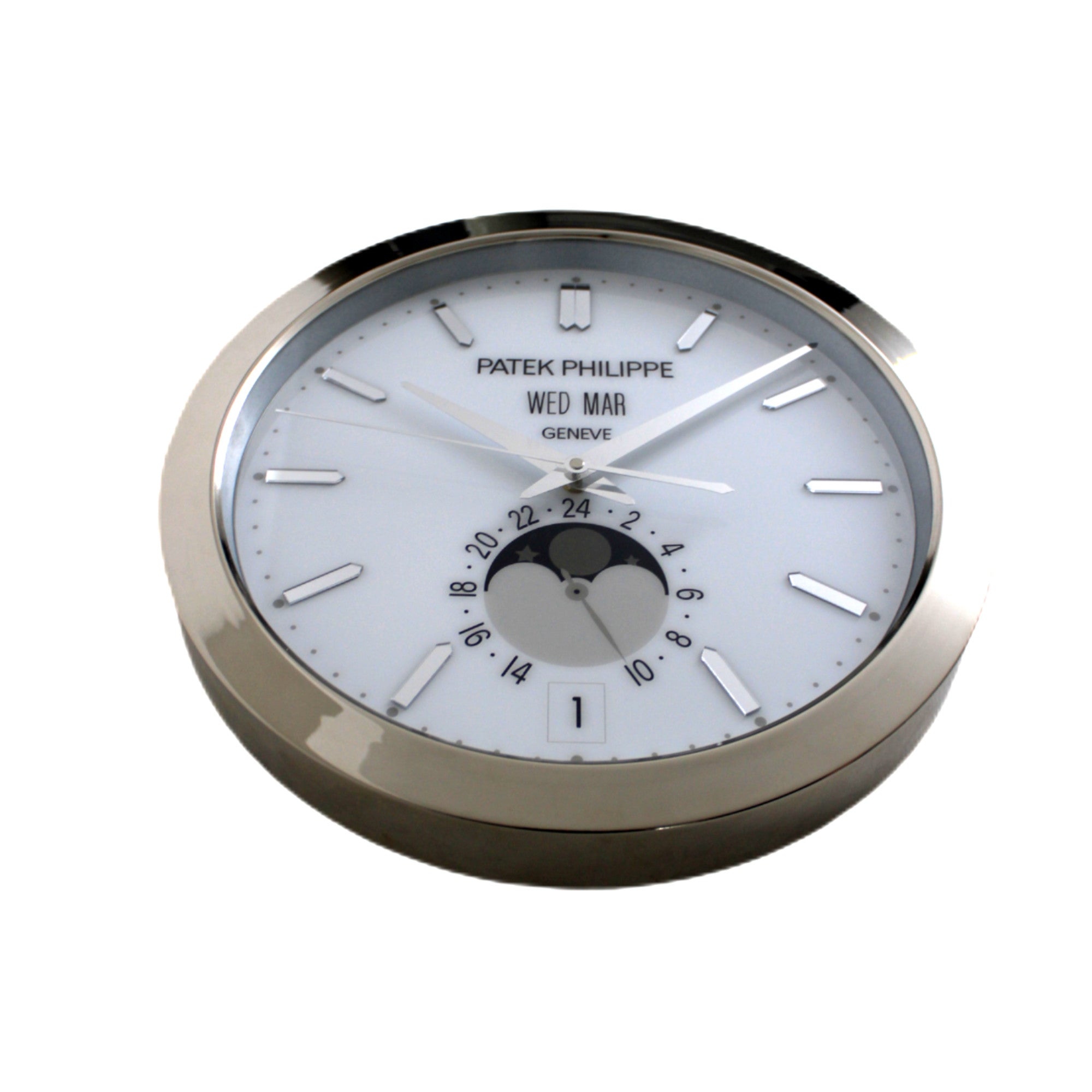
The Patek-style formal case presents the moon phase in the most prestigious context available — the formal round case with its refined bezel and applied markers elevating the lunar display to a piece of genuine horological significance.
Silent Movement
Smooth silent sweep quartz. The moon moves in silence; so does this clock. The lunar cycle displayed without interruption, without tick, in complete composure.
Substantial Build
Premium stainless steel, genuine mineral glass, 2 kg / 4.4 lb. At 40 cm the Moon Phases clock has the physical presence to match the antiquity of the complication it displays.
The Moon, on Your Wall
The moon phase complication is the oldest astronomical function in formal watchmaking — its origins predate the mechanical clock entirely, rooted in the sundials and astrolabes that tracked celestial movements long before gear trains and escapements existed. When early clockmakers transferred the lunar cycle to the clock face, they were continuing a tradition of astronomical tracking that stretches back to the earliest human civilisations. The complication remained a fixture of the finest watches because its subject matter never becomes irrelevant: the moon still rises and sets on the same 29.5-day cycle it always has.
The Patek Moon Phases Wall Clock puts that cycle on your wall at 40 cm / 15.7" in premium stainless steel with genuine mineral glass and silent sweep movement. At 2 kg / 4.4 lb, it has the presence the oldest astronomical complication deserves. Backed by Wclocks' 3-year warranty.
Where It Belongs
The moon phase display connects any room to the sky outside. Here's where it belongs most naturally.
Bedroom
The moon phase belongs in a bedroom — the display that tracks what's happening outside the window while you sleep. The lunar cycle as a bedside reference at 40 cm wall scale.
Living Room Feature
A moon phase display at 40 cm is a conversation piece that never runs out of conversation: every visitor is intrigued by the rotating aperture and what it shows that day.
Study or Library
The moon phase complication has a long history in private libraries — the astronomical reference that connects a room of books and ideas to the world outside. Classical and always appropriate.
Exceptional Gift
For someone who loves astronomy, tides, gardening by the moon, or simply appreciates the most poetic complication in watchmaking. The gift that keeps changing. Arrives presentation-boxed.
Frequently Asked Questions
How accurate is the moon phase display?
The moon phase display on the Patek Moon Phases Wall Clock is a decorative representation of the lunar cycle, rendered as a rotating disc behind a sky-shaped aperture. The disc rotates to show the approximate phase of the moon as a visual indication — showing new moon, waxing crescent, first quarter, waxing gibbous, full moon, waning gibbous, last quarter, and waning crescent across the 29.5-day cycle. For precise astronomical tracking, a specialist moon phase watch with regulated gear ratios would be required. As a wall display piece the Patek Moon Phases shows the lunar cycle with the same visual accuracy that made this complication beloved in formal watchmaking for centuries.
Is the movement silent?
Yes — smooth silent sweep quartz. No ticking, no clicking, no buzz. Continuous silent hand motion — the moon moves silently; so does the clock that tracks it.
What is the case made of?
Premium stainless steel throughout. 2 kg / 4.4 lb — substantially heavier than the standard 35 cm range.
How large is this clock?
Dial diameter: 40 cm / 15.7". The large format gives the moon phase aperture the scale it deserves — the lunar disc visible and impressive from across any room.
How do I hang it?
Wall-mount hook fitting built into the back. At 2 kg, fix into a wall stud or heavy-duty anchor for plasterboard. One screw, rated for the weight.
What battery does it use?
One standard AA battery, not included. Typically 12–18 months with a quality alkaline AA.
Is the front cover real glass?
Yes — genuine mineral glass. Scratch-resistant and optically clear. The moon phase display reads at its most atmospheric under real glass.
The Moon. On Your Wall. 40 cm.
Patek Moon Phases Wall Clock — large moon phase complication style, 40 cm / 15.7", 2 kg / 4.4 lb, silent sweep movement, premium stainless steel, 3-year Wclocks warranty.